Showing posts sorted by relevance for query willie soon. Sort by date Show all posts

Monday, March 9, 2015

Dr. Soon's latest paper on natural climate variability published in Nature Geoscience

A paper published today in the journal Nature Geoscience studies changes in the intertropical convergence zone (ITCZ) over the western Pacific during the Little Ice Age. The paper is co-authored by skeptics Willie Soon and Robert M. Carter, and is yet another example of the high quality, peer-reviewed work on natural climate variability and potential solar-climate relationships being published in highly respected journals by CAGW skeptics such as Dr. Soon.

Unable to attack on a scientific basis anything Dr. Soon has published in peer-reviewed journals, smear-mongerer Gavin Schmidt of NASA/GISS instead told the NYT, “The science that Willie Soon does is almost pointless.” Schmidt thus claims it is "pointless" to study natural variability, solar-climate relationships, and hundreds of potential solar amplification mechanisms published in the peer-reviewed literature, effectively because Schmidt & his falsified climate models have already made their mind up that man-made CO2 is the climate control knob & the sun plays a "pointless" role in climate. 


Note: Other papers have linked shifts in the ITCZ to solar activity and the bipolar seesaw theory of (natural) climate change.

UPDATE:


Fingerprints of the Sun on Asia-Australia Summer Monsoon Rainfalls during the Little Ice Age

author: source: Time: 2015-03-10 

A new paper has been published in Nature Geoscience entitled ‘Dynamics of the intertropical convergence zone over the western Pacific during the Little Ice Age ’ by Hong Yan of the Institute of Earth Environment, Chinese Academy of Sciences and an international team of co-authors from the Alfred Wegener Institute (Wei Wei), Harvard-Smithsonian Center for Astrophysics (Willie Soon), Institute of Earth Environment (Zhisheng An, Weijian Zhou and Yuhong Wang), University of Hong Kong (Zhonghui Liu) and Institute of Public Affairs (Robert M. Carter). The results of the research indicate that both the East Asia Summer Monsoon and the Northern Australia Summer Monsoon retreated synchronously during the recent cold Little Ice Age in response to external forcings such as solar irradiance variation and possibly large volcanic eruptions.

The Asia-Australia monsoon covers the world’s most populated areas, and therefore understanding the factors that control monsoon-belt climatic variation through time is important for response-planning for healthy social-economic development for the globe. Many previous studies have focused on the past climate changes in the Asia-Australia monsoon area, often proposing that the western Pacific Intertropical Convergence Zone (ITCZ) or the associated rainbelt should have migrated southward during cold climate episodes, such as the Little Ice Age (AD 1400-1850). Such migrations should be associated with the occurrence of a weaker East Asian Summer Monsoon and a stronger Australian Summer Monsoon, with opposing rainfall variations between the two hemispheres.

However, hydrological records from the Asia-Australia summer monsoon area, analysed by Professor Hong Yan and his coauthors, show that southward migration of the ITCZ did not occur during the cold Little Ice Age. Instead, the hydrological data support the operation of a new dynamic mechanism named ‘ITCZ/Rainbelt contraction’ in the Western Pacific region during the Little Ice Age.

Prima facie, a southward migration of the ITCZ should result in less precipitation in the East Asia Summer Monsoon area but more rainfall in Australia Summer Monsoon area. In contrast, the Synthesis of a large set of palaeoclimatological records from across the monsoonal area establishes that the precipitation in both continental East Asia and northern Australia decreased synchronously during the Little Ice Age. The unusual spatial variation in paleoclimate records therefore documents a distinctly different rainfall pattern that violates the former expectation of ITCZ southward migration. Furthermore, comparison of these results with solar records indicates that a relationship exists between the rainfall changes and Total Solar Insolation.

To explain these changes, the scientists propose an alternative dynamic scenario which they have tested using process-based climate modeling. Rather than strict north-south migration, the multi-decadal to centennial change for the western Pacific Intertropical Convergence Zone can excitingly be shown to have contracted or expanded in parallel with solar irradiance variations. This new understanding clearly adds to the richness of mechanisms by which the Earth climate system can vary naturally and significantly over periods between a few decades and up to a century in length.


Pattern of rainfall within the East Asia Summer Monsoon (left) and Australia Summer Monsoon (right) area during the LIA. Locations of proxy-hydrology records in the Asia-Australia monsoon area are indicated. Locations that were dry, without apparent change and wet during the LIA are marked in red, purple and blue, respectively. The decreased rainfall in East Asia continent and northern Australia suggested the synchronous retreat of the East Asian Summer Monsoon and the Australian Summer Monsoon during the Little Ice Age (Image by Dr YAN Hong).

Related posts:

Yes, the sun (was) driving global warming

The Sun explains 95% of climate change over the past 400 years; CO2 had no significant influence

Climate Modeling: Ocean Oscillations + Solar Activity R²=.96

Analysis: Solar activity & ocean cycles are the 2 primary drivers of climate, not CO2

Analysis shows accumulated solar energy explains 20th century global warming; no significant effect of CO2

The Time-Integral of Solar Activity explains Global Temperatures 1610-2012, not CO2

Natural Climate Change has been Hiding in Plain Sight

New paper confirms the Sun was particularly active during the latter 20th century

Global warming made simple: How natural variability explains 20th century global warming without man-made CO2

Sunspot Integral v. Temperature

The Sun can't possibly explain global warming

New paper finds recent Grand Maximum of solar activity was 'rare or even unique event' in 3,000 years

New paper finds up to 72% of temperature increase over past 150 years due to the Sun


Monday, August 8, 2011

New Willie Soon paper finds significant solar influence on climate

Harvard astrophysicist and climate scientist professor Willie Soon and colleagues have a new paper in press which examines surface temperatures in China and finds significant warming in the low-CO2 1920's and 1940's, and a significant Sun-climate link for the instrumental record from 1880-2002. The IPCC dismisses the role of the Sun on climate by only considering small changes in total solar irradiance, ignoring large changes in solar UV (which is capable of penetrating the ocean surface to cause heating unlike IR from 'greenhouse gases'), and ignoring secondary effects (e.g. the cosmic ray theory of Svensmark et al).


Journal of Atmospheric and Solar-Terrestrial Physics
Article in Press, Accepted Manuscript - Note to users

doi:10.1016/j.jastp.2011.07.007 | How to Cite or Link Using DOI
Willie Soona, Corresponding Author Contact Information, E-mail The Corresponding Author, Koushik Duttab, David R. Legatesc, Victor Velascod and WeiJia Zhange
a Harvard-Smithsonian Center for Astrophysics, Cambridge, MA 02138, USA
b Large Lakes Observatory, University of Minnesota-Duluth, Duluth, MN 55812, USA
c College of Earth, Ocean, and Environment, University of Delaware, Newark, DE 19716, USA
d Departamento de Investigaciones Solares y Planetarias, Instituto de Geofisica, Universidad Nacional Autonoma de Mexico, Ciudad Universitaria, C.P. 04510, Mexico
e Department of Physics, Peking University, Beijing 100871, China
Received 21 March 2011;  
revised 20 July 2011;  
accepted 25 July 2011.  
Available online 3 August 2011. 


Abstract


The 20th century surface air temperature (SAT) records of China from various sources are analyzed using data which include the recently-released Twentieth Century Reanalysis Project dataset. Two key features of the Chinese records are confirmed: (1) significant 1920 s and 1940 s warming in the temperature records, and (2) evidence for a persistent multi-decadal modulation of the Chinese surface temperature records in covariations with both incoming solar radiation at the top of the atmosphere as well as the modulated solar radiation reaching ground surface. New evidence is presented for this Sun-climate link for the instrumental record from 1880 to 2002. Additionally, two non-local physical aspects of solar radiation-induced modulation of the Chinese SAT record are documented and discussed.

Teleconnections that provide a persistent and systematic modulation of the temperature response of the Tibetan Plateau and/or the tropospheric air column above the Eurasian continent (e.g., 30°N-70°N; 0°-120°E) are described. These teleconnections may originate from the solar irradiance-Arctic-North Atlantic Overturning Circulation mechanism proposed by Soon (2009). Also considered is the modulation of large-scale land-sea thermal contrasts both in terms of meridional and zonal gradients between the subtropical western Pacific and mid-latitude North Pacific and the continental landmass of China. The Circum-global Teleconnection (CGT) pattern of summer circulation of Ding and Wang (2005) provides a physical framework for study of the Sun-climate connection over East Asia. Our results highlight the importance of solar radiation reaching the ground and the concomitant importance of changes in atmospheric transparency or cloudiness or both in motivating a true physical explanation of any Sun-climate connection. We conclude that ground surface solar radiation is an important modulating factor for Chinese SAT changes on multidecadal to centennial timescales. Therefore, a comprehensive view of local and remote factors of climate change in China must take account of this as well as other natural and anthropogenic forcings.

Highlights


The 20th Century surface air temperature (SAT) records of China from various sources are analyzed using data which include the recently-released Twentieth Century Reanalysis Project (20CRv2).

Two key features of the Chinese records are confirmed:

(1) Significant 1920s and 1940s warming in the temperature records

(2) Evidence for a persistent multi-decadal modulation of the Chinese surface temperature records in covariation with solar radiation

New evidence is presented for this Sun-climate link for the instrumental record from 1880 to 2002. As well, two non-local, physical aspects of solar radiation-induced modulation of the Chinese SAT record are documented and discussed. We conclude that solar radiation provides demonstrable forcing for Chinese SAT changes on multidecadal to centennial timescales.

Sunday, February 22, 2015

NYT/Greenpeace think these 4 graphs showing a remarkable 130-year solar-climate relationship were fabricated by the oil industry

Climate activists masquerading as (yellow) journalists at the NYT, fed by Greenpeace, are attempting to create a faux-scandal revolving around Harvard-Smithsonian astrophysicist Dr. Willie Soon, due to his modest request for continuing support of his ongoing research examining the relationship between solar activity and climate.

Dr. Soon's allegedly-scandalous grant request from the Charles G. Koch Charitable Foundation, obtained from a Greenpeace 2009 FOIA request, is shown in the documents below. The grant request clearly documents the scientific rationale and Dr. Soon's prior work in this field, and is conservatively titled "A Sun-Climate Coincidence?."

Included with Dr. Soon's modest $65,000 grant request below are the four graphs demonstrating "a plausible connection of solar irradiance...compared with U.S. temperature records in 4 spatial domains." It is left to the reader to determine if any of these four spatially-disparate graphs suggest the possibility of any Sun-climate relation between solar activity and temperature over the past 130 years.

The faux-scandal fabricated by Greenpeace/NYT journalist-activists is that Dr. Soon "delivered" to the oil industry what they wanted to hear, but the Greenpeace documents actually show that Dr. Soon had already completed most of the preliminary data analysis for this work prior to receiving a very modest grant from the Charles G. Koch Charitable Foundation for continued support necessary to write and publish a peer-reviewed paper describing the analysis that Dr. Soon had already performed in advance of the modest grant proposal.

Dr. Soon's private grant request is based upon the conservative scientific arguments he clearly documents in his grant request below, and indeed shows most of his work for this grant had already been completed prior to his grant request for continuing support.

The NYT/Greenpeace-fabricated and libelous smear attack upon an honest and honorable scientist in pursuit of the scientific truth on climate is thus demonstrated to be a faux-scandal and should backfire as an expose' of one of many examples of how Greenpeace activists, facilitated by compliant yellow journalists at the NYT/Guardian/etc, work tirelessly to stifle, smear, libel, and fabricate faux-embarrassment for any scientific inquiry daring to threaten the AGW religion.


Saturday, March 13, 2010

Recommended Climate Videos at Climateclips.com

Fred Singer Fred Singer, professor Emeritus af environmental science at the University of Virginia. Former l...


Other recommended videos at Climateclips.com:
Warming Not Unusual The 20th century warming is not unusual, Says Dr. Sallie Baliunas and Dr. Willie Soon from the harva...
The Greenhouse and CO2 The greenhouse and CO2 is not straight on a simple matter. "It´s more complicated than the IPCC proc...
David Legates David R. Legates is an Associate Professor and Director of the Center for Climatic Research at...
John R Christy John Christy, Professor of Atmospheric Science and Director of the Earth. System Science Center at ...
Look At The Right Place"If you want to know how the climate system on Earth works, you should look at the bulk of the atmos...
H2O The Dominant Greenhouse Gas The role of Water vapor and clouds in the atmosphere are by far greater than that of CO2....
Henrik Svensmark Professor Henrik Svensmark is the head of the Centre for Sun-Climate Research, at DTU Space, Technic...
Jørgen Peder Steffensen Jørgen Peder Steffensen is associate professor and curator at the centre for Ice and Climate at Nie...
Willie Soon Willie Wei-Hock Soon (born 1966) is an astrophysicist at the Solar and Stellar Physics Division of...
Jørgen Peder Steffensen Jørgen Peder Steffensen is associate professor and curator at the centre for Ice and Climate at Nie..
Look At The Right Place "If you want to know how the climate system on Earth works, you should look at the bulk of the atmos.
Nils-Axel Moerner’s trip to the Maldives
We are living in cold times "We started to observe temperatures at the coldest spot in the last 10,000 years"- the Little Ice Age

Friday, May 27, 2016

Dr. Willie Soon takes on Bill Nye, the Scientism Guy

Bill Nye the Scientism Guy

Facts don’t support his hypothesis, so he shouts louder, changes subjects and attacks his critics

By Willie Soon and István Markó

True science requires that data, observations and other evidence support a hypothesis – and that it can withstand withering analysis and criticism – or the hypothesis is wrong.

That’s why Albert Einstein once joked, “If the facts don’t fit your theory, change the facts.” When informed that scientists who rejected his theory of relativity had published a pamphlet, 100 authors against Einstein, he replied: “Why 100? If I were wrong, one would be enough.”

In the realm of climate scientism, the rule seems to be: If the facts don’t support your argument, talk louder, twist the facts, and insult your opponents. That’s certainly what self-styled global warming “experts” like Al Gore and Bill Nye are doing. Rather than debating scientists who don’t accept false claims that humans are causing dangerous climate change, they just proclaim more loudly:        
Our theory explains everything that’s happening. Hotter or colder temperatures, wetter or drier weather, less ice in the Arctic, more ice in Antarctica – it’s all due to fossil fuel use.
Climate scientism aggressively misrepresents facts, refuses to discuss energy and climate issues with anyone who points out massive flaws in the manmade climate chaos hypothesis, bullies anyone who won’t condemn carbon dioxide, and brands them as equivalent to Holocaust Deniers.

In a recent Huffington Post article, Mr. Nye “challenges climate change deniers” by claiming, “The science of global warming is long settled, and one may wonder why the United States, nominally the most technologically advanced country in the world, is not the world leader in addressing the threats.”  

Perhaps it’s not so settled. When the Australian government recently shifted funds from studying climate change to addressing threats that might result, 275 research jobs were imperiled. The very scientists who’d been saying there was a 97% consensus howled that there really wasn’t one. Climate change is very complex, they cried (which is true), and much more work must be done if we are to provide more accurate temperature predictions, instead of wild forecasts based on CO2 emissions (also true).

Perhaps Mr. Nye and these Australian researchers should discuss what factors other than carbon dioxide actually cause climate and weather fluctuations. They may also encounter other revelations: that climate science is still young and anything but settled; that we have little understanding of what caused major ice ages, little ice ages, warm periods in between and numerous other events throughout the ages; that computer model predictions thus far have been little better than tarot card divinations.

As for Nye’s assertions that “carbon dioxide has an enormous effect on planetary temperatures” and “climate change was discovered in recent times by comparing the Earth to the planet Venus” – those are truly bizarre, misleading, vacuous claims.

The relatively rapid increase in atmospheric CO2 over the last 30 years has produced only 0.2°C (0.4°F) of global warming – compared to a 1°C (1.8°F) total temperature increase over the past 150 years. That means the planetary temperature increase has slowed down, as carbon dioxide levels rose. In fact, average temperatures have barely budged for nearly 19 years, an inconvenient reality that even the IPCC (Intergovernmental Panel on Climate Change) now recognizes.

This is an “enormous effect”? By now, it is increasingly clear, the proper scientific conclusion is that the “greenhouse effect” of rising atmospheric carbon dioxide is very minor – as a recent article explains. Mr. Nye and his fans and fellow activists could learn a lot from it.

Objective readers, and even Mr. Nye, would also profit from reading a rather devastating critique of one of The Scientism Guy’s “science-is-easy” demonstrations. It concludes that the greenhouse effect of CO2 molecules is of course real, but Mr. Nye’s clever experiment for Al Gore’s “Climate Reality Project” was the result of “video fakery” and “could never work” as advertised. When will Messrs. Nye and Gore stop peddling their Hollywood special effects?

For that matter, when will they stop playing inter-planetary games? Mr. Nye and the popular media love to tell us that carbon dioxide from oil, gas and coal could soon turn Planet Earth into another Venus: over-heated, barren, rocky and lifeless. Princeton Institute of Advanced Study Professors Freeman Dyson and Will Happer show that this is utter nonsense.

For one thing, Venus is far closer to the sun, so it is subjected to far more solar heat, gravitational pull and surface pressure than Earth is. “If we put a sunshade shielding Venus from sunlight,” Dr. Dyson notes, “it would only take 500 years for its surface to cool down and its atmosphere to condense into a carbon dioxide ocean.” It’s not the high temperature that makes Venus permanently unfriendly to life, he adds; it’s the lack of water.

Second, the amounts of atmospheric carbon dioxide are grossly disproportionate. Earth has barely 0.04% carbon dioxide (by volume) in its atmosphere, whereas Venus has 97% and Mars has 95% CO2. Mars much greater distance from the sun also means it has an average surface temperature of -60°C (-80°F) –underscoring yet again how absurd it is to use planetary comparisons to stoke climate change fears.

Third, Earth’s atmosphere used to contain far more carbon dioxide. “For most of the past 550 million years of the Phanerozoic, when multicellular life left a good fossil record, the earth’s CO2 levels were four times, even ten times, higher than now,” Dr. Happer points out. “Yet life flourished on land and in the oceans. Earth never came close to the conditions of Venus.” And it never will.

Fourth, Venus’s much closer proximity to the sun means it receives about twice as much solar flux (radiant energy) as the Earth does: 2637 Watts per square meter versus 1367, Happer explains. The IPCC says doubling atmospheric CO2 concentrations would be equivalent to just 15 W/m2 of additional solar flux. That’s nearly 100 times less than what Venus gets from being closer to the Sun.

Fifth, surface pressure on Venus is about 90 times that of the Earth, and strong convection forces increase the heating of surface air, he continues, making Venus’s surface even hotter. However, dense sulfuric acid clouds prevent most solar heat from ever reaching the planet’s surface. Instead, they reflect most sunlight back into space, which is “one of the reasons Venus is such a lovely morning or evening ‘star.’”  

Of course, none of these nerdy details about Earth-Venus differences really matter. We already know plant life on Planet Earth loved the higher CO2 levels that prevailed during the Carboniferous Age and other times when plants enjoyed extraordinary growth.

However, even burning all the economically available fossil fuels would not likely even double current atmospheric CO2 levels – to just 0.08% carbon dioxide, compared to 21% oxygen, 78% nitrogen, 0.9% argon and 0.1% for all other gases except water vapor. And doubling CO2 would get us away from the near-famine levels for plants that have prevailed for the past tens of millions of years.

Carbon dioxide is absolutely essential for plant growth – and for all life on Earth. Volumes of research clearly demonstrate that crop, garden, forest, grassland and ocean plants want more CO2, not less. The increased greening of our Earth over the past 30 years testifies to the desperate need of plants for this most fundamental fertilizer. The more CO2 they get, the better and faster they grow.

More than 70% of the oxygen present in the atmosphere – and without which we could never live – originates from phytoplankton absorbing carbon dioxide and releasing oxygen. Keep this in mind when Bill Nye The Junk Science Guy tells you carbon dioxide is bad for our oceans and climate. 

Dr. Willie Soon is an independent scientist who has been studying the Sun and Earth’s climate for 26 years. Dr. István Markó is a professor of chemistry at the Université Catholique de Louvain in Belgium and director of the Organic and Medicinal Chemistry Laboratory.


Bill Nye, the mechanical engineer turned scientism celebrity guy who likes to pretend he’s a real scientist.

Tuesday, February 24, 2015

Yes, the sun (was) driving global warming

A new article published by the Washington Post titled No, the sun isn’t driving global warming attempts to discredit Dr. Willie Soon's peer-reviewed, published research papers, some of which have demonstrated solar influences upon climate. The article does not cite nor provide any scientific rebuttal whatsoever to any specific scientific paper written by Dr. Soon, nor to any of the hundreds of other peer-reviewed published papers demonstrating a solar-climate relationship and potential solar amplification mechanisms. 

Instead, the author cites the repeatedly-debunked and simplistic propaganda attempting to dismiss the role of the Sun in climate change promulgated by the warmist Skeptical Science website. 

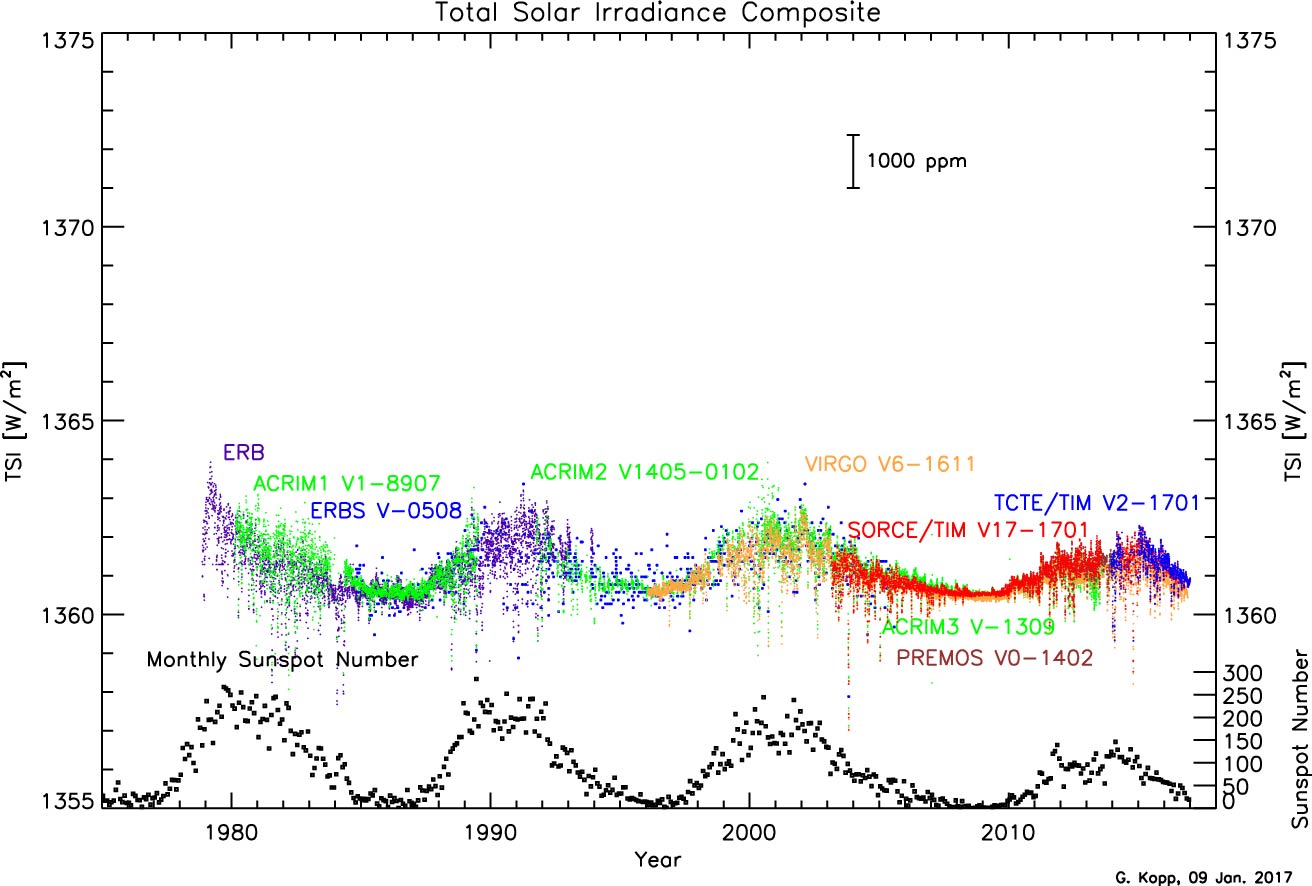
These falsehoods include the claim that there was no increase in solar activity during the 20th century. This is debunked by the SkS graph in the article itself shown below. The dark blue moving average line in the graph of total solar irradiance (TSI) clearly demonstrates the average TSI of the first half of the 20th century is much less than the entire 2nd half of the 20th century. Given that many papers have found a lagged effect of solar activity changes upon climate, and the large thermal inertia of the oceans, is it entirely reasonable to expect that a sustained high solar output of the latter half of the 20th century would produce a delayed and gradually increasing trend, as was observed. 

This is better demonstrated by calculating the "sunspot integral" of solar activity, which clearly demonstrates a steady rise in accumulated solar output beginning in the 1930's to the end of the 20th century. The correlation of the sunspot integral to global temperature (~.95) is also far superior to that of CO2 and global temperature (~.35). 


The real hockey stick. See also The Sun explains 95% of climate change over the past 400 years; CO2 had no significant influence

The global warming "pause" began almost simultaneously with the current lull in solar activity, while atmospheric CO2 levels continued a steady rise. Even the IPCC, which formerly completely dismissed the role of the Sun in climate change was forced to admit in the latest assessment report that low solar activity is one potential explanation (of at least 66 others) proposed as a cause of the 18+ year "pause" of global warming. It is nonsense to claim that solar activity only significantly affects climate when temperatures are steady to falling, but not while temperatures are rising. 

The Washington Post article below also claims the solar activity of the late 20th century was not exceptional in comparison to the past millennium, a claim which is refuted by multiple proxy reconstructions including:

The article also attempts to dismiss solar effects upon climate by claiming the 0.1% change in solar output over a solar cycle is insufficient to force global temperatures. This simplistic analysis conveniently ignores hundreds of peer-reviewed papers describing potential solar amplification mechanisms, which suggest how tiny changes in solar output may be amplified by many potential mechanisms and secondary effects to produce large-scale changes in climate. 

In sum, the attempts by warmists to dismiss the role of the Sun in climate change are based upon oversimplified and elementary analyses which conveniently ignore hundreds of peer-reviewed papers finding an increase of solar activity over the 20th century to a solar "Grand Maximum" at the end of the 20th century, solar-driven ocean oscillations -which have profound and lagged effects upon climate, and many other solar amplification mechanisms described in the literature, all of which provide plausible mechanisms and explanations for all or most of the global warming of the 20th century, as well as the current 18-year global warming "pause."

Related posts:

The Sun explains 95% of climate change over the past 400 years; CO2 had no significant influence


Climate Modeling: Ocean Oscillations + Solar Activity R²=.96


Analysis shows accumulated solar energy explains 20th century global warming; no significant effect of CO2

The Time-Integral of Solar Activity explains Global Temperatures 1610-2012, not CO2

Natural Climate Change has been Hiding in Plain Sight

New paper confirms the Sun was particularly active during the latter 20th century

Global warming made simple: How natural variability explains 20th century global warming without man-made CO2

Sunspot Integral v. Temperature

The Sun can't possibly explain global warming

New paper finds recent Grand Maximum of solar activity was 'rare or even unique event' in 3,000 years

New paper finds up to 72% of temperature increase over past 150 years due to the Sun
How climate models dismiss the role of the Sun in climate

How climate models dismiss the role of the Sun in climate change [Part 3]
How climate models dismiss the role of the Sun in climate change [Part 4]


By Chris Mooney February 23

Excerpts:

Despite all the attention to who funds him, it is important to note that much of the controversy here is about Soon’s actual scientific views. While Soon has challenged the conclusions of other climate and environmental researchers on subjects ranging from the vulnerability of polar bears to the planet’s climate history, one of his principal arguments has long been that variations in the behavior of the sun, rather than human caused greenhouse gas emissions, are the central factor driving climate change.

Thus the Heartland Institute, a conservative think tank that lists Soon as one of its experts, calls him “a leading authority on the relationship between solar phenomena and global climate.” In a recent Heartland Institute report, Soon and a co-author wrote that “The Sun may have contributed as much as 66% of the observed twentieth century warming, and perhaps more” — going on to suggest that global cooling may lie ahead, due to the “recently quiet Sun and extrapolation of solar cycle patterns into the future.”

This “it’s the sun” claim is an extremely popular argument with climate change doubters — according to the website Skeptical Science, it is the second most popular anti-global warming argument of them all, second only to “climate’s changed before.” So is there any truth to it? After all, regardless of who supports his research, if Soon is actually right on the substance then we may be getting all worked up about global warming for nothing.

Certainly, the argument that the sun — rather than carbon dioxide pollution — is driving global warming cannot be dismissed out of hand. After all, if there is indeed significantly more solar radiation coming in to the Earth, that would definitely raise the planet’s temperature (and vice-versa). The sun is, after all, where we get most of our energy from. Thus, the argument is at least physically plausible.

However, the idea that the sun is currently driving climate change is strongly rejected by the world’s leading authority on climate science, the U.N.’s Intergovernmental Panel on Climate Change, which found in its latest (2013) report that “There is high confidence that changes in total solar irradiance have not contributed to the increase in global mean surface temperature over the period 1986 to 2008, based on direct satellite measurements of total solar irradiance.”

The IPCC “basically says that global warming is not caused by the sun,” says Gerald Meehl, a senior scientist at the National Center for Atmospheric Research. “The strongest evidence for this is the record of satellite measurements of solar output since the late 1970s that show no increasing trend in solar output during a period of rapid global warming.”

Here’s a graphic, courtesy of Skeptical Science, showing overall trends in solar irradiance and temperature:


The sun’s output clearly does vary, as you can see above. For instance, scientists have identified an 11 year sunspot cycle, and found that at the maximum point for sunspots in the cycle, total solar irradiance is indeed somewhat greater than at the minimum. This can have regional effects on the Earth’s climate, says Meehl. “There is evidence for a solar effect in some regions,” he says, “but not a strong global signal over the era of reliable satellite measurements.”

It isn’t only the IPCC that concludes this. “No satellite measurements have indicated that solar output and variability have contributed in a significant way to the increase in global mean temperature in the past 50 years,” concluded a recent workshop report from the National Academy of Sciences. The report noted that while the 11-year sunspot cycle can lead to changes in total solar irradiance of as much as .1 percent, that only translates into a “few hundredths of a degree centigrade” temperature response on the Earth.

“Clearly the sun matters and if it varied a lot then there would be consequences, but it doesn’t,” explains Kevin Trenberth, a prominent climate researcher who is also at the National Center for Atmospheric Research. “The variations are only order 0.1%.”

Of particular significance is the fact that solar irradiance has not shown an increasing trend over the past several decades, while global temperatures clearly have.

A recent scientific review article on climate and the sun similarly notes “the lack of detection of an underlying irradiance trend in the past three decades,” and concludes, in rather strong terms, that:
Claims that the Sun has caused as much as 70% of the recent global warming … presents fundamental puzzles. It requires that the Sun’s brightness increased more in the past century than at any time in the past millennium, including over the past 30 years, contrary to the direct space-based observations. And it requires, as well, that Earth’s climate be insensitive to well-measured increases in greenhouse gases at the same time that it is excessively sensitive to poorly known solar brightness changes. Both scenarios are far less plausible than the simple attribution of most (90%) industrial global warming to anthropogenic effects, rather than to the Sun.

So in sum: It’s not that the sun can’t influence climate. It can, and it does. And climate scientists have accordingly been studying the influence of the sun for many years.

And they have found that, while the sun certainly is not irrelevant, the case for steadily rising carbon dioxide as the principal factor driving the current warming trend just makes a lot more sense.

Willie Soon and some other climate change doubters would surely argue back against this finding — but it’s a strong consensus finding, as shown above. The weight of expert opinion isn’t with these doubters — but the burden of proof most definitely is.

Wednesday, March 4, 2015

Dr. Richard Lindzen in the WSJ: The Political Assault on Climate Skeptics

The Political Assault on Climate Skeptics

Members of Congress send inquisitorial letters to universities, energy companies, even think tanks


Rep. Raul Grijalva (D., Ariz.) at a Capitol Hill news conference, Nov. 12, 2014. 

By RICHARD S. LINDZEN  March 4, 2015 THE WALL STREET JOURNAL

Research in recent years has encouraged those of us who question the popular alarm over allegedly man-made global warming. Actually, the move from “global warming” to “climate change” indicated the silliness of this issue. The climate has been changing since the Earth was formed. This normal course is now taken to be evidence of doom.

Individuals and organizations highly vested in disaster scenarios have relentlessly attacked scientists and others who do not share their beliefs. The attacks have taken a threatening turn.

As to the science itself, it’s worth noting that all predictions of warming since the onset of the last warming episode of 1978-98—which is the only period that the United Nations Intergovernmental Panel on Climate Change (IPCC) attempts to attribute to carbon-dioxide emissions—have greatly exceeded what has been observed. These observations support a much reduced and essentially harmless climate response to increased atmospheric carbon dioxide.

In addition, there is experimental support for the increased importance of variations in solar radiation on climate and a renewed awareness of the importance of natural unforced climate variability that is largely absent in current climate models. There also is observational evidence from several independent studies that the so-called “water vapor feedback,” essential to amplifying the relatively weak impact of carbon dioxide alone on Earth temperatures, is canceled by cloud processes.

There are also claims that extreme weather—hurricanes, tornadoes, droughts, floods, you name it—may be due to global warming. The data show no increase in the number or intensity of such events. The IPCC itself acknowledges the lack of any evident relation between extreme weather and climate, though allowing that with sufficient effort some relation might be uncovered.

World leaders proclaim that climate change is our greatest problem, demonizing carbon dioxide. Yet atmospheric levels of carbon dioxide have been vastly higher through most of Earth’s history. Climates both warmer and colder than the present have coexisted with these higher levels.

Currently elevated levels of carbon dioxide have contributed to increases in agricultural productivity. Indeed, climatologists before the recent global warming hysteria referred to warm periods as “climate optima.” Yet world leaders are embarking on costly policies that have no capacity to replace fossil fuels but enrich crony capitalists at public expense, increasing costs for all, and restricting access to energy to the world’s poorest populations that still lack access to electricity’s immense benefits.

Billions of dollars have been poured into studies supporting climate alarm, and trillions of dollars have been involved in overthrowing the energy economy. So it is unsurprising that great efforts have been made to ramp up hysteria, even as the case for climate alarm is disintegrating.

The latest example began with an article published in the New York Times on Feb. 22 about Willie Soon, a scientist at the Harvard Smithsonian Center for Astrophysics. Mr. Soon has, for over 25 years, argued for a primary role of solar variability on climate. But as Greenpeacenoted in 2011, Mr. Soon was, in small measure, supported by fossil-fuel companies over a period of 10 years.

The Times reintroduced this old material as news, arguing that Mr. Soon had failed to list this support in a recent paper in Science Bulletin of which he was one of four authors. Two days later Arizona Rep. Raul Grijalva, the ranking Democrat on the Natural Resources Committee, used the Times article as the basis for a hunting expedition into anything said, written and communicated by seven individuals— David Legates, John Christy, Judith Curry, Robert Balling, Roger Pielke Jr. , Steven Hayward and me—about testimony we gave to Congress or other governmental bodies. We were selected solely on the basis of our objections to alarmist claims about the climate.

In letters he sent to the presidents of the universities employing us (although I have been retired from MIT since 2013), Mr. Grijalva wanted all details of all of our outside funding, and communications about this funding, including “consulting fees, promotional considerations, speaking fees, honoraria, travel expenses, salary, compensation and any other monies.” Mr. Grijalva acknowledged the absence of any evidence but purportedly wanted to know if accusations made against Mr. Soon about alleged conflicts of interest or failure to disclose his funding sources in science journals might not also apply to us.

Perhaps the most bizarre letter concerned the University of Colorado’s Mr. Pielke. His specialty is science policy, not science per se, and he supports reductions in carbon emissions but finds no basis for associating extreme weather with climate. Mr. Grijalva’s complaint is that Mr. Pielke, in agreeing with the IPCC on extreme weather and climate, contradicts the assertions of John Holdren, President Obama ’s science czar.

Mr. Grijalva’s letters convey an unstated but perfectly clear threat: Research disputing alarm over the climate should cease lest universities that employ such individuals incur massive inconvenience and expense—and scientists holding such views should not offer testimony to Congress. After the Times article, Sens. Edward Markey (D., Mass.), Sheldon Whitehouse (D., R.I.) and Barbara Boxer (D., Calif.) also sent letters to numerous energy companies, industrial organizations and, strangely, many right-of-center think tanks (including the Cato Institute, with which I have an association) to unearth their alleged influence peddling.

The American Meteorological Society responded with appropriate indignation at the singling out of scientists for their scientific positions, as did many individual scientists. On Monday, apparently reacting to criticism, Mr. Grijalva conceded to the National Journal that his requests for communications between the seven of us and our outside funders was “overreach.”

Where all this will lead is still hard to tell. At least Mr. Grijalva’s letters should help clarify for many the essentially political nature of the alarms over the climate, and the damage it is doing to science, the environment and the well-being of the world’s poorest.

Mr. Lindzen is professor emeritus of atmospheric sciences at MIT and a distinguished senior fellow of the Cato Institute.

Thursday, March 7, 2013

Changing Sun, changing climate


Changing sun, changing climate

by Bob Carter, Willie Soon & William Briggs
March 8, 2013 Quadrant Online

Scientists have been studying solar influences on the climate for more than 5000 years.Chinese imperial astronomers kept detailed sunspot records, and noticed that more sunspots meant warmer weather. In 1801, celebrated astronomer William Herschel, the first to observe Uranus, noted that when there were fewer spots the price of wheat soared. He surmised that less “light and heat” from the sun resulted in reduced harvests.

It is therefore perhaps surprising that Professor Richard Muller (University of California, Berkeley) recently claimed that “no component that matches solar activity” could be identified in his newly reconstructed BEST global land temperature record. Instead, Professor Muller said, carbon dioxide controls our changing temperature.
Can it really be true that solar radiation, which supplies Earth with the energy that drives our weather and climate – and which, when it varied in the past, is known to have caused major climate shifts – is no longer the principal influence on climate change?
Consider the charts that accompany this article. In locations as widely separated as US, the Arctic and China, they show a strong and direct relationship between temperature and incoming solar radiation -- the data for the US coming directly from Professor Muller’s own BEST data! That such a tight relationship between temperature and solar radiation holds for many disparate geographical areas indicates that the US result cannot be dismissed as just a local aberration.
A strong sun-climate relationship requires mechanisms to exist whereby our sun can both cool and warm the Earth. One such mechanism is fluctuations in the total amount of incoming solar energy, but measurements suggest that this is not a dominant effect. Another cause, and probably a more substantial one, is modulation of the amount of solar radiation that reaches earth’s surface by changes in total cloud cover.
Recent work by NCAR senior scientists Drs. Harry van Loon and Gerald Meehl has also emphasized a physical relationship between incoming solar radiation and temperature. These scientists argue indirectly that, in testing for this relationship, daytime maximum temperature is the most appropriate criterion to use to characterize the temperature. This measure is available for the US from the BEST data set, and has therefore been used in plotting the accompanying  graph below.
The reason why many previous studies have failed to identify a strong sun-temperature link may be that they have used the daily average temperature to represent the temperature component of the relationship. This can easily introduce erroneous complications related to the part of each day when the sun shines on the other hemisphere and darkness prevails at any particular site being studied.
Nevertheless, recent analyses indicate that even small changes in incoming solar radiation can have a strong effect on Earth’s temperature and climate. In 2005, research by one of us (Soon) demonstrated the existence of a strong correlation between solar radiation and the anomalies in average temperature for the Arctic over the past 130 years (below).
Since then, we have demonstrated that similar correlations exist for all of the regions that surround the Arctic, including the US mainland and China (below).
The reconfirmation now of a strong sun-temperature relation based specifically upon the daytime temperature maxima adds strong and independent scientific weight to the reality of the sun-temperature connection.
The close relationships between the abrupt ups and downs of solar activity and similar changes in temperature that we have identified occur locally in coastal Greenland; regionally in the Arctic Pacific and north Atlantic; and hemispherically for the whole circum-Arctic region. This suggests strongly that changes in solar radiation drive temperature variations on at least a hemispheric scale. 
Close correlations like these simply do not exist for temperature and changing atmospheric CO2 concentration. In particular, there is no coincidence between the measured steady rise in global atmospheric CO2 concentration and the often dramatic multi-decadal (and shorter) ups and downs of surface temperature that occur all around the world.
Ongoing research in collaboration with Professor David R. Legates of the University of Delaware, provides a self-consistent explanation for these apparent sun-climate correlations. Our hypothesis involves exchanges of heat and moisture between the equator and the Arctic region.
Direct evidence now exists that changes in solar activity have influenced what is called the “conveyor-belt” circulation of the great Atlantic Ocean currents over the past 240 years. Interestingly, it transpires that solar-driven changes in temperature, and consequential changes in the volume of freshwater released from the Arctic, cause variations in sea surface temperature in the tropical Atlantic 5-20 years later. That this time lag was not taken into account in earlier sun-climate relationship studies is another reason for their comparative lack of success.
The new peer-reviewed scientific results about sun-climate relationships summarized above are of disparate nature and are obtained with independent datasets stem from several different research groups. Considered together, this new research renders implausible the prevailing assumption that changes in solar activity play no (or only an insignificant) role in climate change.
The hallmark of good science is the testing of plausible hypotheses that are then supported or rejected by evidence gathered from either observation or experiment. The evidence from BEST's newly analysed data, and from our own and other published studies, is strongly consistent with the hypothesis that solar factors are the major cause of multidecadal climate change, especially in the northern hemisphere circum-Arctic regions.
Incidentally, but importantly, BEST's own data also clearly invalidate the alternative hypothesis that CO2 is the most important cause of observed temperature changes across the USA.
In a nutshell, climate is always changing and it is the sun wot does it.
Willie Soon has been researching the relationship of solar radiation and Earth’s climate at the Harvard-Smithsonian Center for Astrophysics for the past 22 years. William M. Briggs is a meteorology-trained statistician and former associate editor of the Monthly Weather Review. Bob Carter is author of the book Climate: the Counter Consensus, and an Emeritus Fellow of the IPA.