Showing posts sorted by relevance for query co2 bit player. Sort by date Show all posts

Monday, September 20, 2010

CO2 is a bit player in Global Warming

        An essay by Richard Petschauer, Carbon Dioxide Heat Trapping: Merely a Bit Player in Global Warming, shows that IPCC estimates of climate sensitivity to CO2 are greatly exaggerated. The author utilizes the Spectracalc spectral analysis program to determine the ability of the 'greenhouse' gas CO2 to absorb the long wave infrared energy emitted from the Earth's surface (a stepwise spectral line-by-spectral line "integral" of the area under the curve). He finds that at present CO2 levels, only 7.4% of heat radiated from the Earth is absorbed by CO2 and that the vast majority of heat absorption is due to water vapor. Furthermore, a doubling of CO2 levels only results in the absorption by CO2 increasing to 8.0%, a 4x increase to 8.7%, and 8x increase to 9.6%.
         As a first approximation to determine 'climate sensitivity' (change in temperature due to a doubling of CO2), one might assume the total so-called 'greenhouse effect' of 33C is correct, multiply that by the % change in absorption due to doubled CO2 (0.6%), to arrive at a climate sensitivity of only 0.198C. This is a far cry from the climate sensitivity figures of 2 - 4.5C claimed by the IPCC. The empirical data to date also supports a climate sensitivity of <1C (refs 1,2,3,4,5,6...)
Region of interest of CO2 LWIR (long wave infrared) absorption
Blowup of region of interest showing overlap between CO2 and water vapor
shaded area is absorbed by CO2 only


Blowup of above figure. Area with asterisk is absorbed by CO2 only.
ABSTRACT: New calculations show that doubling of carbon dioxide (CO2) will increase average global temperature by only about 1F (degrees Fahrenheit) or 0.55C (degrees Centigrade), much less than the range of 2C to 4.5C estimated by the United Nations International Panel on Climate Change (IPCC). These new calculations are based on NASA supported spectral calculations available on the Internet relating to greenhouse gases. The temperature increases are estimated to be somewhat more in winter in the colder climates because of reduced competing atmosphere water vapor, but smaller increases at other times and places. These calculations also estimate that a 10% increase of water vapor in the atmosphere, a stronger greenhouse gas than CO2, or a reduction in the average cloud cover of only about 2 percent, will increase global temperature about as much as doubling CO2 would. Each additional doubling of CO2 will cause further temperature increases about the same as that caused by the first doubling. Greenhouse gases, except water vapor, only trap heat at certain narrow wavelengths of infrared radiation related to their molecular structures. Data shows that present concentrations of CO2, a strong absorber, are already well above the saturation value at its principal wavelength, so increases in it have a relative small affect. These new calculations are based on atmospheric models of the energy absorption bandwidths of greenhouse gases coupled with Max Planck’s equations relating to infrared wavelength distributions. A new simple technique is also proposed in the appendix to measure actual trapped heat being radiated back from the atmosphere to the Earth. This can be used to evaluate validate various estimating models. It also indicates that the role of clouds and their height above the Earth may have a larger role than previously thought. Since clouds operate as both powerful heat-trapping agents, overriding others, and a reflector of the sun’s energy, they may be the key factor in the regulation of the average global temperature. At the present time, they are one of the least measured parameters in the computer models predicting future climate changes. Weather and climate forecasting considering all factors is very complex, thus this paper does not cover that subject. However it is felt that the simple role of long-term heat rises due to only CO2 changes is a much simpler process and better estimated by basic models as used herein. Certain shortcomings in the IPCC data and estimates, as reported by others, are also summarized. Based on this new information, recommendations are made regarding future U.S. energy policy. While it does appear that the recent years show a warming trend, the role of CO2 in this is very small, and perhaps beneficial in moderating winter temperatures in colder climates.

h/t comment by Scottar alerting me to this essay

Wednesday, November 26, 2014

Why greenhouse gas radiative forcing doesn't explain Earth's energy budget

We have previously demonstrated that the atmospheric mass/gravity/pressure theory of the 33C greenhouse effect explains Earth's surface temperature and the temperatures throughout the troposphere, rather than radiative forcing from greenhouse gases.

We have also demonstrated why the atmospheric mass/gravity/pressure theory of the greenhouse effect also perfectly explains the observed greenhouse effect on Titan, the closest Earth analog in our solar system, and the only planet other than Earth with an atmosphere comprised of mostly non-greenhouse gases (Titan: 98.4% Nitrogen, 0.1% hydrogen, and only 1.5% greenhouse gas methane compared to Earth's 78.09% nitrogen, 20.95% oxygen, 0.93% argon, 0.04% carbon dioxide).


We now address three additional reasons why the conventional anthropogenic CO2 warming theory is flawed due to incorrect assumptions regarding the energy budget. In contrast, the mass/gravity/pressure alternative greenhouse theory is entirely 
compatible with Earth's energy budget, physical laws, and observations. 

The radiative greenhouse theory is commonly represented by the Earth energy budget devised by Kiehl and Trenberth as shown in this diagram from their 2008 publication:


Trenberth, Fasullo, Kiehl 2008 Earth energy budget shows "atmospheric window" transmitting only 40 W/m2 from the surface directly to space
which shows an "atmospheric window" where the greenhouse gases don't significantly absorb/emit infrared radiation, and thus most of this radiation travels directly from the surface to space unimpeded by greenhouse gases, or any radiative forcing as a result. 


The "atmospheric window" of radiation direct to space falls between 8-12 micron wavelengths, as shown in the figures above and below, which includes the peak emission wavelengths (~8-11 microns) from Earth, thus ~80% of these peak emissions from Earth pass directly to space without being absorbed or emitted by greenhouse gases, thus don't contribute to radiative forcing. 


Blue curve shows the Planck curve assuming Earth radiated as a true blackbody, with peak emissions located at ~10 microns, which is at the middle of the 8-12 micron "atmospheric window" that is not absorbed/emitted by greenhouse gases.
However, according to the Trenberth et al Earth energy budget above, only 40 W/m2 passes through the "atmospheric window," i.e. only 10% of the 396 W/m2 radiative surface emissions in his energy budget.

The Planck–Einstein relation is a formula integral to quantum mechanics, and states that the energy of a photon (E) is proportional to its frequency (ν). The constant of proportionality, h, is known as the Planck constant:


and since frequency v is inversely related to wavelength λ by

v = c/
λ where c = speed of light

therefore

E = hc/λ

thus, the shorter the wavelength/higher the frequency of a photon, the higher the energy it contains.

Therefore, the highest energy photons at the short 8-12 micron wavelengths emitted from Earth's surface fall within the direct atmospheric window to space without any interaction with greenhouse gases.

We can get a sense for the huge effect just a few microns change in wavelength has on the corresponding blackbody emission temperature by plotting the peak blackbody emission wavelength in microns vs. the peak emission temperature of a blackbody determined by Wien's Displacement Law, which shows the emission temperature at the beginning of the atmospheric window at 8 microns is 89C, dropping all the way down to -31.7C at the end of the atmospheric window at 12 microns, a temperature change of 120.7C.


The catastrophic greenhouse gas CO2, however, absorbs and emits line spectra centered around 15 microns, so what does Wien's displacement law calculate for a blackbody (which CO2 is not) emitting at 15 microns? Whoa, a toasty peak emission temperature of minus 80C:


Thus, the radiative greenhouse theory makes the absurd assumption that CO2 radiating at a blackbody temperature of -80C contributes 20% of the radiative greenhouse effect and heats the Earth by 6.6C from the equilibrium temperature with the Sun of -18C to -11.4C. How can a cold body radiating at -80C cause a hotter body at -18C to warm by 6.6C or at all? Pictet's experiment 214 years ago, the 1st and 2nd laws of thermodynamics, the principle of maximum entropy production, Planck's law, the Pauli exclusion principle, and quantum mechanics all prove it cannot. CO2 radiating at an equivalent blackbody temperature of  -80C cannot possibly account for 20% of the ~33C greenhouse effect to cause 20% of the warming from -18C to 15C.

Further, even within the CO2 equivalent -80C blackbody emission peak at 15 microns [line spectra range ~13.5 - 17 microns], the CO2 and water vapor absorption/emission spectra significantly overlap such that almost 70% is independently due to water vapor and thus would be completely unaffected by increased CO2. Thus, despite overwhelming evidence that CO2 cannot significantly warm the planet, if you still believe the radiative greenhouse theory and reject the alternate mass/pressure greenhouse theory, the overlapping spectra of CO2 with water vapor prove CO2 is a bit player at most:

Shaded area shows difference between CO2 and water vapor absorption/emission spectra

Blowup of above figure. Area with asterisk is absorbed by CO2 only, remainder below overlaps with absorption spectra of water vapor.

Another huge flaw in Trenberth's energy budget is the false assumption that infrared radiation from greenhouse gases can heat the oceans, and just as effectively as the land surface. This is disproven by both theory and observations, since IR can only penetrate the ocean surface a few microns to cause evaporative cooling of the ocean skin surface, not warming. Since the oceans cover 70% of the Earth's surface, this problem alone suggests the radiative greenhouse theory is exaggerated by at least 70% (not even considering the cooling effect of evaporation and that evaporation results in clouds and further cooling).


These are only three of many fatal flaws of conventional radiative greenhouse theory. There is one and only one explanation for the entire ~33C greenhouse effect that satisfies all physical laws and is in accordance with millions of weather balloon and satellite observations, the atmospheric mass/gravity/pressure greenhouse theory. 

Wednesday, May 8, 2013

Review paper finds European climate change due to the Sun, not CO2

A new SPPI & CO2 Science review paper entitled Solar Influence on European Temperatures finds extensive evidence that solar activity has dominated European climate change of the past 2 millennia  which "suggests that there is little reason to attribute 20th-century global warming to the concomitant increase in the air's CO2 content. Natural variability appears quite capable of explaining it all. In conclusion, paleoclimatic studies from Europe provide more evidence for the global reality of solar-induced temperature oscillations pervading both glacial and interglacial periods, which oscillations are looking more and more likely as the primary forcing agent responsible for driving temperature change during the Current Warm Period. The concurrent historical increase in the air's CO2 content, on the other hand, is likely little more than a bit player."

Excerpt:
"In yet another refutation of the theory of CO2-induced global warming, Mangini et al. found "a high correlation between δ18O and δ14C, that reflects the amount of radiocarbon in the upper atmosphere," and they note that this correlation "suggests that solar variability was a major driver of climate in Central Europe during the past 2 millennia." In this regard, they report that "the maxima of δ18O coincide with solar minima (Dalton, Maunder, Sporer, Wolf, as well as with minima at around AD 700, 500 and 300)," and that "the coldest period between 1688 and 1698 coincided with the Maunder Minimum." Also, in a linear-model analysis of the percent of variance of their full temperature reconstruction that is individually explained by solar and CO2 forcing, they found that the impact of the Sun was fully 279 times greater than that of the air's CO2 concentration, noting that "the flat evolution of CO2 during the first 19 centuries yields almost vanishing correlation coefficients with the temperature reconstructions."

european_temps
[Illustrations, footnotes and references available in PDF version]
We begin this review of the Sun's influence on European temperatures with the study of Holzhauser et al. (2005)[1], who presented high-resolution records of variations in glacier size in the Swiss Alps together with lake-level fluctuations in the Jura mountains, the northern French Pre-Alps, and the Swiss Plateau in developing a 3,500-year climate history of west-central Europe, starting with an in-depth analysis of the Great Aletsch glacier, which is the largest of all glaciers located in the European Alps.

Saturday, September 25, 2010

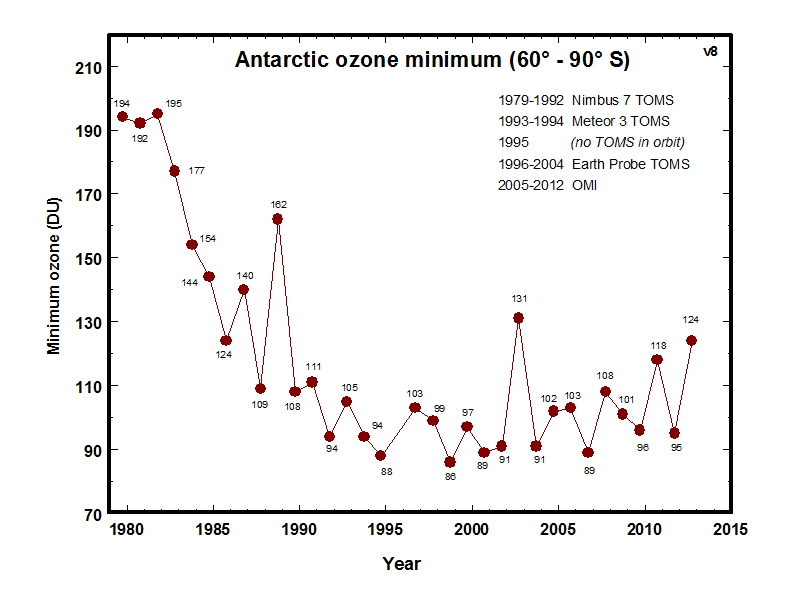
Paper: Ozone 2-3 times more important than CO2

From the annals of The (one & only) incontrovertible, settled science where the evidence is growing stronger every day about climate destruction from CO2 pollution, comes the publication today of a paper in the Journal of the American Meteorological Association finding that it is ozone depletion, not CO2, that was the dominant "main driver" or "forcing" parameter of the second half of the 20th century southern hemisphere climate. Meanwhile, the IPCC maintains with > 90% 'confidence' a.k.a. 'false consensus' that it is CO2 which is responsible for 97% of all positive forcing of climate. Is the IPCC the real 'denier' that CO2 is a bit player at most?

Stratospheric ozone depletion: the main driver of 20th Century atmospheric circulation changes in the Southern Hemisphere

Authors: Lorenzo M. Polvani, Darryn W. Waugh, Gustavo J. P. Correa, Seok-Woo Son

Abstract: The importance of stratospheric ozone depletion on the atmospheric circulation of the troposphere is studied with an atmospheric general circulation model, the Community Atmospheric Model, version 3 (CAM3), for the second half of the 20th century. In particular, the relative importance of ozone depletion is contrasted with that of increased greenhouse gases and accompanying sea surface temperature changes. By specifying ozone and greenhouse gas forcings independently, and performing long, time-slice integrations, it is shown that the impacts of ozone depletion are roughly two to three times larger than those associated with increased greenhouse gases, for the Southern Hemisphere tropospheric summer circulation. The formation of the ozone hole is shown to affect not only the polar tropopause and the latitudinal position of the midlatitude jet: it extends to the entire hemisphere, resulting in a broadening of the Hadley cell and a poleward extension of the subtropical dry zones. The CAM3 results are compared to and found to be in excellent agreement with those of the multi-model means of the recent Coupled Model Intercomparison Project (CMIP3) and Chemistry-Climate Model Validation (CCMVal2) simulations. This study, therefore, yields a direct attribution of most Southern Hemisphere tropospheric circulation changes, in the second half of the 20th century, to stratospheric ozone depletion.

Wednesday, November 19, 2014

French scientist explains why the greenhouse effect is primarily due to atmospheric mass/gravity/pressure

Since the time of the great physicist Maxwell to the present day, a few skeptics have noted that the primary source of the greenhouse effect is due to the effect of a gravity field upon adiabatic gases (both IR-active and non-IR-active) free to convect heat and transport latent heat from the surface, which rise/expand/cool until equilibrated with the upper atmosphere, following which, due to their gravitational potential energy and increased density from cooling, subsequently fall/compress/warm back to the surface. 

This adiabatic expansion/compression process of all atmospheric gases repeats ad infinitum to create the adiabatic lapse rate/temperature profile of the entire troposphere. Radiative forcing from IR active gases is a bit player completely dominated by the thermodynamics of convection, evaporation, and the ideal gas law which are the real causes of the real ~33C greenhouse effect, not radiative forcing from greenhouse gases. 

As demonstrated by a paper in Nature by Robinson & Catling, convection/adiabatic lapse rate controls the radiative-convective equilibrium and tropospheric temperature profile of all planets in our solar system with thick atmospheres. The troposphere ends at about ~10,000 km where the pressure = 0.1 bar, at which point the atmosphere is too thin to sustain convection, and radiative forcing from greenhouse gases takes over to cause cooling of the stratosphere and beyond to space.

The greenhouse gas water vapor DOES have a profound effect upon climate, slowing of cooling at night and slowing of warming during the day. The wet adiabatic lapse rate is only one-half the dry adiabatic lapse rate, proving that water vapor has a large negative-feedback cooling effect, not warming effect, on climate. 

Here's one of many such explanations recently published in the French magazine Contrepoints by French scientist Jacques Henry (Google translation from French):


To finish with the theory of greenhouse effect

Published on in Science

By Jacques Henry
NASA's Marshall credits atmosphere Flight Center (creative commons license)
Since I sometimes get stolen green wood when I rise on the theory of the greenhouse effect, it is necessary to dot the "i". The greenhouse effect is now considered a "scientific fact" since millions of people adhere to this concept in particular "experts IPCC self-proclaimed climate" , a multitude of NGOs politicized and finally many ministers environmental or energy around the world and especially in Europe.
The hypothesis of global warming is based on two tenets, the greenhouse effect and the contribution of CO2 to the greenhouse effect. What is surprising, and disturbing, is that "scientific fact" is not based on sound science and compelling yet recognized as fundamental laws of thermodynamics or the gravitational equilibrium of the atmosphere. It is on this last point so I would insist in this post because the interpretation of gravitational equilibrium of the atmosphere has led to erroneous conclusions that have been misused to formulate the theory of the greenhouse effect and the intervention of CO2 in this theory.
I do not and will talk to the thermal radiative balance of the earth exposed to solar radiation is described by the equations of Planck and Stefan-Boltzmann black on the body, but only of the confusion has led to biased interpretation and erroneous atmospheric balance subject to the gravitational field of the Earth.
Unless deny gravitation and refute the observations of Galileo and Newton to the top of the Leaning Tower of Pisa, one must recognize certain facts. The atmosphere "weighs" on average ten tons per square meter at the sea. This is the first fact and the tiny gaps around the mean hold meteorologists because it is changes in atmospheric pressure anticyclones , depression and other phenomena related to just the fluctuating nature of the atmosphere of a field of high pressure to an area of ​​low pressure variations on the whole of plus or minus 3%, which seems negligible but is not in Since huge air masses are involved. The density of the atmosphere and its temperature decrease with altitude, no one can deny these facts, ask any climber, it will confirm . Gravitational compression of the atmosphere therefore establishes a temperature distribution over the entire height of the troposphere, that is to say up to about 17 km altitude (at the equator) because beyond scarcity gas and ionization of molecules by the solar wind and cosmic rays are the laws concerning the behavior of gas no longer apply.
This correlation between altitude, air density and temperature is described by a simple law of physics called "adiabatic lapse rate", which has been verified and can not be disputed (see below). It indicates that the dry atmosphere cools to 9.8 degrees per kilometer and moist air only 6.5 degrees for one mile due to the very high thermal inertia of the water vapor.
As a reminder, the application of the laws of thermodynamics to Earth shows conclusively that the planet behaves like a black body at a temperature of - 18 degrees. The average altitude where you can find the temperature of -18 degrees is found to be 5000 meters. When the law describing the lapse rate of the atmosphere we find a mean surface temperature of 14.5 degrees (see below), which is fully consistent with all observations at the Earth is applied. Naturally, the closer you get to the poles, the higher the temperature decreases due to the impact of solar radiation decreases but the law describing the gravitational lapse rate of the atmosphere it still applies. And in deserts where the air is very dry, the average temperature is higher during the day and lower at night because there is not enough water vapor to absorb the difference of day and night.
Transposition of the comments on the atmosphere of Venus that led to the formulation of the theory of the greenhouse effect is wrong, for several reasons.
Venus is closer to the Sun and thus receives more radiant energy from the star, however its albedo (in a word can reflect solar radiation) is much higher than that of the Earth. The density of the atmosphere of Venus consists mainly of carbon dioxide (CO2) is about 92 times higher than that of the Earth with a ground pressure of 920 tonnes per m2 (basically as if we was at 1,000 meters under water on Earth) but the laws describing the lapse rate of the atmosphere are the same as those described for the Earth's atmosphere is a cooling of about 9 degrees per kilometer.
However, the density of the atmosphere of Venus (95 kg / m3 at the Venus ground) is such that the duct surface temperature according to the same laws of adiabatic compression to a temperature of 465 degrees. To find values ​​similar to those of the Earth sea level atmospheric pressure must be at an altitude of 50 kilometers in the dense Venusian atmosphere where the temperature is so close to 0 degrees. We must not forget that the last day Venusian is 243 Earth days but trade between the bright side and the dark side of this planet are very active convection and if the illuminated face is "overheated" This explains why the face dark of the planet does not cool significantly because of strong winds continuously distributed heat around the planet.
For all these reasons, it can not be a greenhouse effect on Venus. The planet is indeed in radiative equilibrium with space but the parameters of this equilibrium are different from those existing for the Earth because of strong adiabatic lapse rate and due to the high density of its atmosphere. If there was a "greenhouse effect" on Venus because of its rich atmospheric CO2, there is a long time since the surface of this planet is molten gold that is not the case! There are indeed mountains and plains on this planet perfectly recognized by radar imagery and even volcanoes and perhaps the "sea" of liquid carbon dioxide supercritical ...
Confusion and transposition to Earth observations of Venus from the fact that the atmosphere of this planet is made ​​up of more than 95% carbon dioxide, nitrogen for the rest and traces of sulfur oxides. He needed no more for the NASA engineers, including James Hansen, a former specialist in the atmosphere of Venus, incorrectly state that CO2 is a greenhouse because the surface of Venus is heated by this effect greenhouse at a temperature of 465 degrees: "There has to see what is happening on Venus! " , they said. But it is totally wrong and contrary to the laws describing the state of the gas! The theory of the greenhouse effect is therefore in violation of the fundamental laws of thermodynamics and also in violation of the laws describing the state of which are also associated gas, it's still much, much too much for n 'any critical thinking ...
...
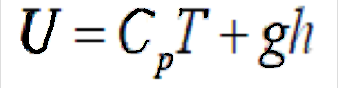
For the curious here is the equation of the adiabatic equilibrium. The thermodynamic state of a column of air is described in a simplified manner as follows:
jacqueshenry1
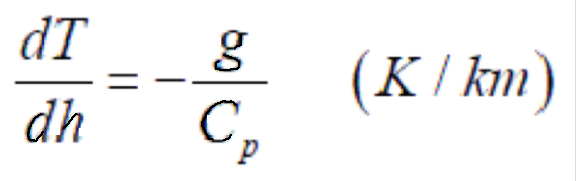
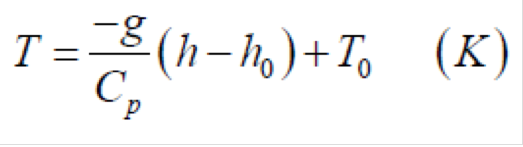
where U is the total energy, Cp the thermal capacity of the atmosphere (1004 J / kg / ° K for the dry air, wet air 1012 to a medium comprising 0.25% of water vapor), T the temperature of the portion of air column (in degrees Kelvin), g the acceleration due to gravity and h is the height or altitude. If this drift equation is obtained:
jacqueshenry2
expressed in degrees K / km. We see the term g / Cp called "adiabatic lapse rate" which describes the balance between pressure and temperature of the atmosphere. This differential equation can be rearranged as follows:
jacqueshenry3
Since g and Cp are positive physical quantities, we see immediately that the temperature distribution in the Earth's gravitational field, but it is valid for any planet equipped with a atmosphere decreases with altitude .
This equation can be solved well by introducing h "zero", the lower altitude at sea level or at the top of the Eiffel Tower for example T "zero", the temperature at this altitude:
jacqueshenry4
And then there are easily ground temperature (h-zero = 0) by introducing into the calculation altitude 5 km to the isotherm at - 18 ° C corresponding to the radiative balance of the Earth system + atmosphere (as described by the Stefan-Boltzmann law):
t = - 6.5 (h - 5) - 18 = 32.5 to 18 = 14.5 degrees C, the 6.5 factor being the thermal capacity of the air loaded with water vapor. The average water vapor content of the atmosphere is of the order of 0.25%.
Note: These data are in any high school physics course and also there
There is a small detail to be to convince the skeptics who still have some courage to read this long post. If there were to be a greenhouse gas in our atmosphere, it would obviously steam for two reasons.
There has in the atmosphere more than 600 times more water vapor than carbon dioxide, it is still necessary factor 600 multiplied by 5, since the heat capacity of water is 4180 J / kg / ° K compared to that of CO2 is 840 joules / kg / ° K. We arrive at a factor of 3000 difference. So if there were to be a "greenhouse effect" on Earth due to water vapor, there is a long time since all the oceans would have evaporated into space [e.g. Hansen's "runaway-greenhouse" "tipping point" allegedly turning the Earth into Venus]... Carbon dioxide is wrongly accused!
Jacques Henry worked for many years as a researcher at the CNRS (Centre National de Recherche ScientifiqueI, the French. Partner of the Max Planck Society,  and as a consultant for the nuclear division of Electricité de France (EdF) and is now retired
Related: